



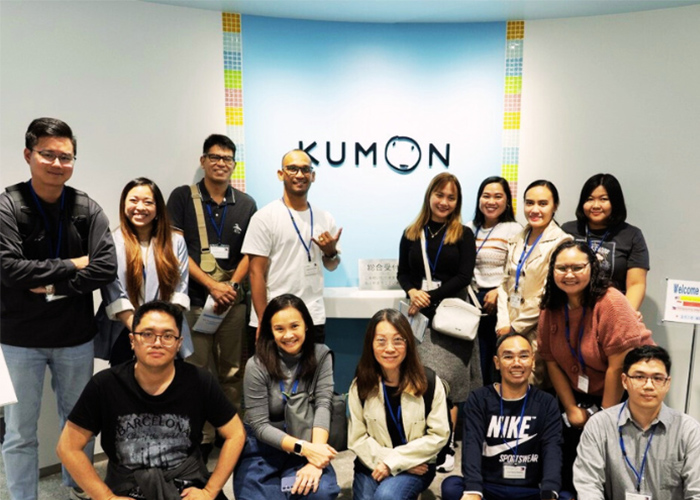


Scenes from the KUMON Visits in the ASEAN–Japan Educator Exchange Program
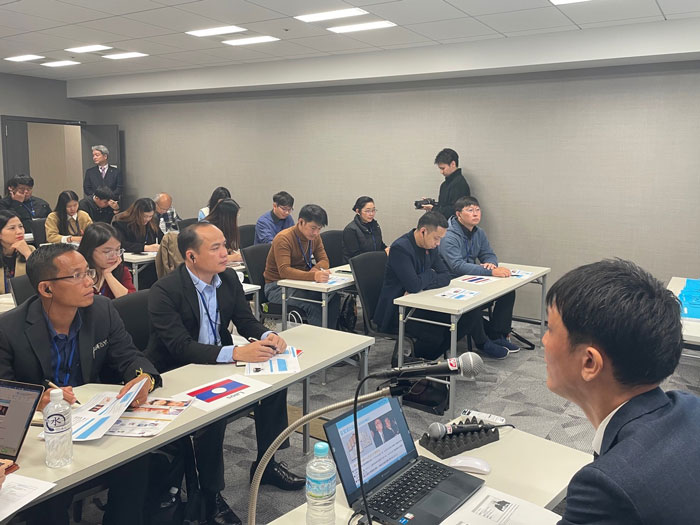
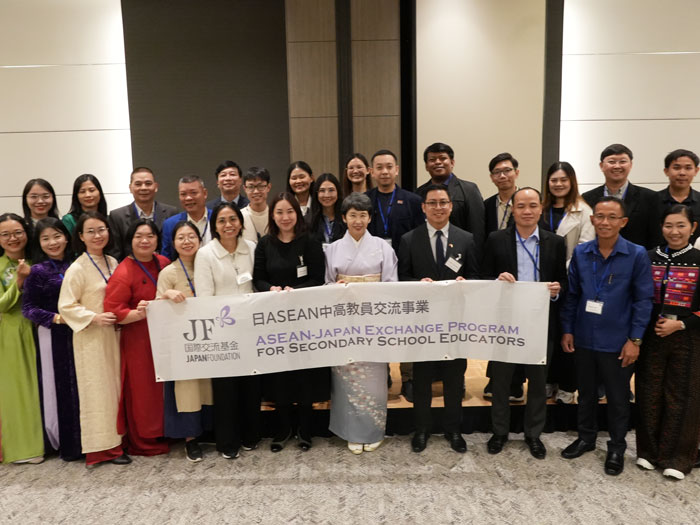
When we asked why KUMON was approached as a destination for the company visit, we were told that the organizers wanted participants to observe diverse aspects of education in Japan beyond public education, thereby deepening their understanding of the realities of Japanese education. They also believed it would be beneficial for participants to hear about KUMON’s broad business development in the ASEAN region and its SDGs initiatives. On three occasions—October 27, November 10, and November 21, 2025—more than 70 teachers from nine ASEAN countries (Indonesia, Cambodia, Singapore, Thailand, the Philippines, Brunei, Vietnam, Malaysia, and Laos) visited and learned about KUMON’s business and global expansion, the features of the Kumon Method, and its initiatives related to the SDGs.
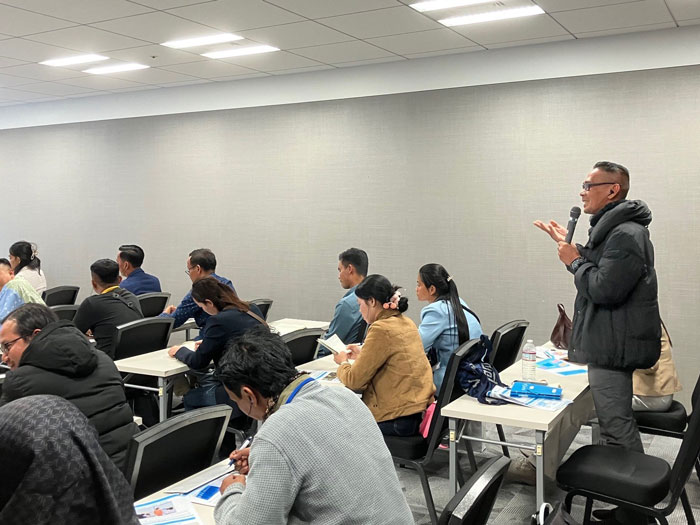
During the Q&A session following the presentation, with consecutive interpretation provided, many questions were raised that directly connected to educational practice, such as teaching methods and materials used in the Kumon Method, criteria for hiring instructors, how learners are supported, and the potential for expansion to additional countries. There were also questions reflecting interest in instruction for people with disabilities and Learning Therapy, learning at Kumon centers, the content of materials in countries where KUMON operates, and learning outcomes.
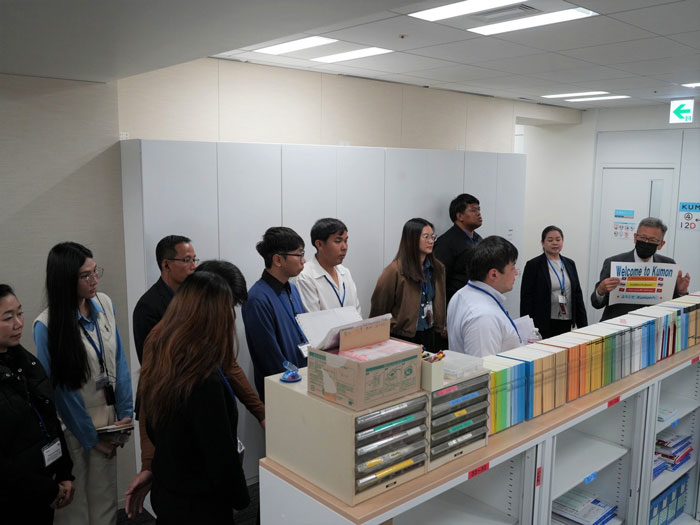
After the Q&A, a tour of the KUMON Shinagawa office was conducted. The Tokyo General Affairs Team introduced the Learning Therapy Center and the correspondence learning team, among others. Participants also commented that it was “a wonderful company,” and the office tour concluded in a warm and friendly atmosphere, thanks to the employees’ welcoming hospitality.
※Learning Therapy: A program that aims to activate the brain and prevent or improve the progression of dementia by performing reading, writing, calculations, and a “Magnet Number Board” (a board with numbers written on it, where the user places magnetic pieces with the same numbers) while measuring time.
Deepening the Bonds of Learning: The Significance of This Program as Told by the Japan Foundation
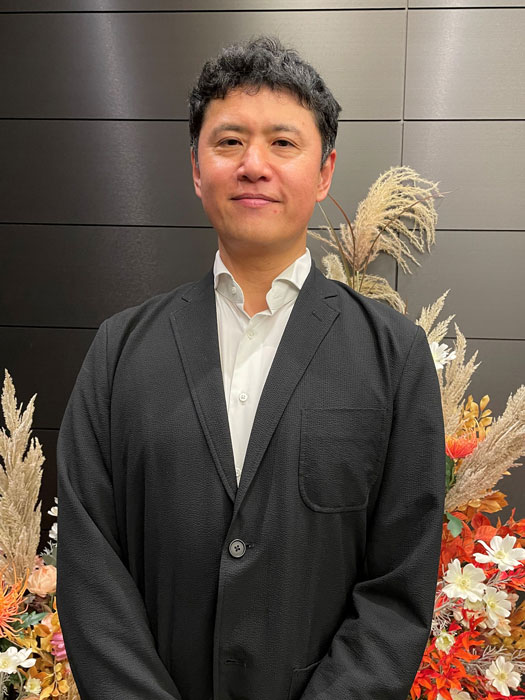
We spoke with Mr. Nakashima, Global Partneships Dept. International Operations Section Ⅱ, and his colleague Mr. Yamazaki about their hopes for the Program, what they observed among participants, and their expectations going forward.
Q: What hopes and intentions did you incorporate in the ASEAN–Japan Educator Exchange Program?
Nakashima: The Japan Foundation was established in 1972 and became an independent administrative institution in 2003. We hope that by having teachers from ASEAN countries observe Japanese education and SDGs initiatives, and by fostering understanding of Japan through exchanges with Japanese children, the teachers will be able to apply what they learned in these lessons after returning home, thereby nurturing exchange for the next generation.
Q: What were the participants like, and did you see any changes in them?
Nakashima: There participants are outstanding teachers recommended by each country’s Ministry of Education. Many teachers were surprised by how diligent Japanese children are, and at the same time showed interest in self-directed learning. Discipline and diligence on one hand, and independence on the other, may appear contradictory at first glance, so it is very interesting that teachers from ASEAN countries valued both aspects. Also, when visiting Japanese elementary schools, participants learned about the practice of everyone cleaning together during “cleaning time.” This is uncommon in ASEAN countries, and some said they would like to introduce it at their own schools.
Q: What is your outlook for the future?
Nakashima: This Program is scheduled to continue for 10 years from 2024. Over the remaining eight years, we hope participants will observe Japanese education and give back what they have learned to their home countries. We also hope that Japanese issues such as the declining birthrate and aging population will be raised in ASEAN classrooms and that discussions will expand. In addition, it is important for the Program to grow continuously and developmentally through information-sharing among participating teachers and by producing learning outputs. We will continue providing materials and would like to increase opportunities for us to learn from teachers in ASEAN countries as well.
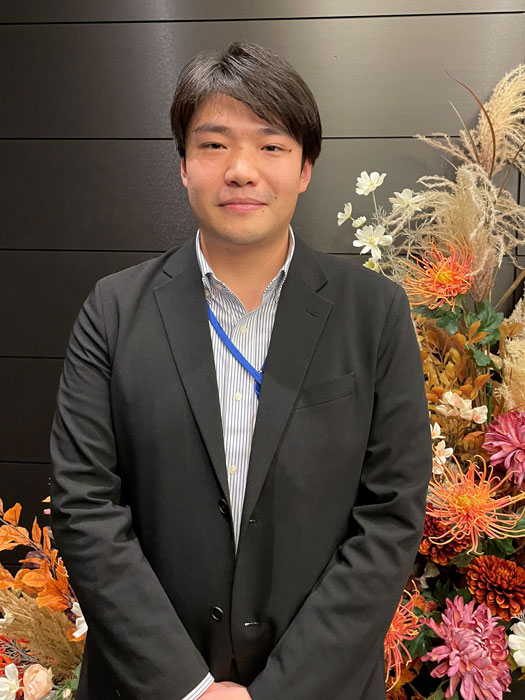
Mr. Yamazaki
Q: What scene left a strong impression on you?
Yamazaki: The lunch meeting during the high school visit. There was time for Japanese high school teachers and ASEAN teachers to talk while having lunch. Watching them, I strongly felt that ASEAN and Japan countries share common challenges. For example, children not coming to school, or how to help students concentrate on studying—these are worries they share. Rather than Japan one-sidedly showing “the good parts of Japanese education,” they showed things as they are, and I saw the teachers learning from each other’s perspectives. Even though each country’s educational circumstances differ, I felt it is important to hold discussions from the same viewpoint: how to make future education better. There are issues that occur in schools that are universal worldwide, and from those, new perspectives and learning emerge. Since there is also much we can learn from teachers in ASEAN countries, I would like to explore those areas further.
Q: What is the appeal of this Program?
Yamazaki: By observing schools and private companies, it’s not so much that knowledge about Japan’s education sector has increased; rather, the biggest appeal is that the bonds between ASEAN and Japan countries have deepened. There is significance in being able to realize that “challenges are universal” by discussing them from the same eye level.
Q: What were the participants like during the KUMON visit?
Yamazaki: I was surprised that many participants already knew about KUMON. Everyone listened intently and showed strong interest in the learning materials. In particular, many were interested in the individualized learning approach that provides materials in small steps according to each student’s level.
Q: What is your outlook for the future?
Yamazaki: By hosting observations, we want people to see things as they are. We want them to learn not only about school education, but also about educational settings like KUMON. Also, rather than presenting Japanese education as “ideal,” we want to share all aspects of it, including its challenges. By doing so, teachers from ASEAN countries should be able to find commonalities with the challenges they face.
Educational Possibilities Expanded Through KUMON: Voices from ASEAN Teachers
Next, we spoke with teachers from Thailand, Vietnam, and Laos who visited KUMON about what motivated them to participate, their impressions of the KUMON visit, and their outlook for the future.
Thailand: Mr. Adison Naettip, Social Studies teacher at an integrated junior/senior high school in Chiang Mai
Vietnam: Ms. Le Thi Phuong Thao, National language teacher at a junior high school in Hanoi
Laos: Mr. Bongrati Vong, Social Studies (History) teacher at an integrated junior/senior high school in Vientiane
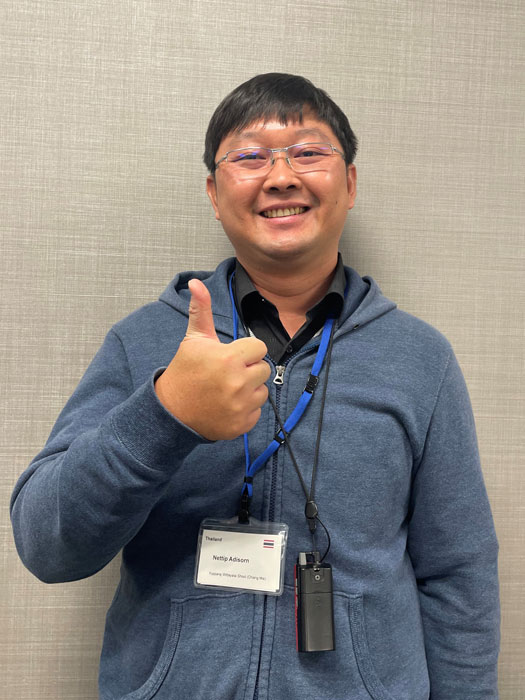
at a Thai integrated junior/senior high school
Q: What motivated you to participate?
Mr. Naettip (Thailand): I had a strong interest in Japanese education and wanted to learn from it.
Ms. Thao (Vietnam): I received information from the Japan Foundation through Japan’s Ministry of Education, Culture, Sports, Science and Technology and applied. I wanted to achieve personal growth and also to learn about advanced educational case studies from Japan.
Mr. Vong (Laos): I joined to learn how classes are conducted in Japanese schools, compare differences with Laos, and find methods that can be applied.
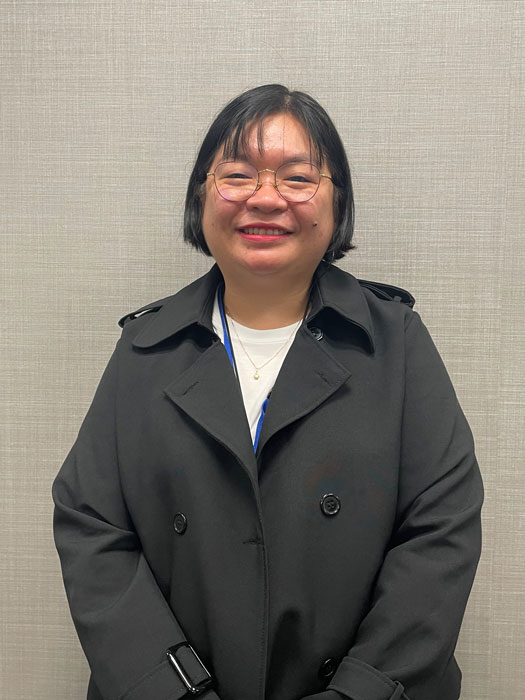
at a Vietnamese junior high school
Q: What were your impressions after hearing about KUMON?
Mr. Naettip (Thailand): I was moved by the founder’s feelings for his son. I also felt that the corporate philosophy permeates to the employees. Since my father is also a school teacher, I want to convey KUMON’s influence to my students and my son.
Ms. Thao (Vietnam): As someone who teaches students, I strongly empathized with KUMON’s philosophy. In particular, I think it is wonderful that the Kumon Method is well established through self-learning and individualized learning. I was also impressed by the learning style, where learners can decide for themselves when to come to a Kumon center, which contrasts with Vietnam’s situation where schedules are fixed. In addition, I value the fact that KUMON contributes to society while pursuing profit as a company and strengthening its brand power.
Mr. Vong (Laos): I was moved by the story of how KUMON began when the founder created handmade materials for his son. KUMON’s philosophy is wonderful, and I was especially touched by its efforts to deliver high-quality education to children in poverty. I want to share this story with the students at my school as well. I want to spread hope that “even if you are poor, you can receive a good-quality education.”
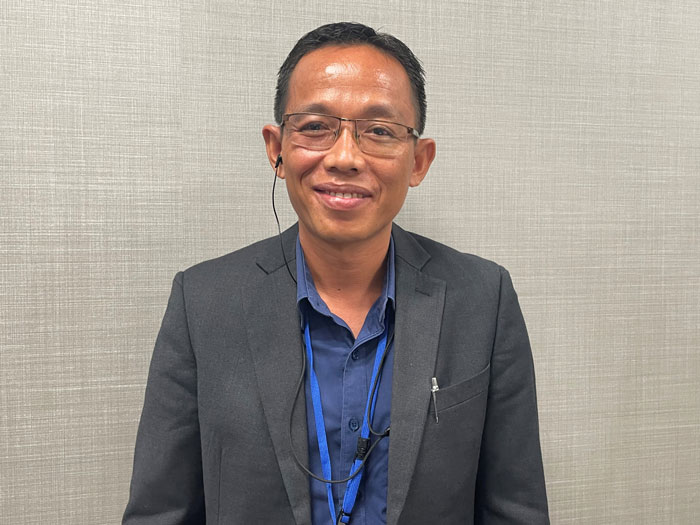
at a Laotian integrated junior/senior high school
Q: How will you make use of what you learned going forward?
Mr. Naettip (Thailand): I was deeply impressed by Japan’s approach to “developing human resources without leaving anyone behind.” Diversity and collaboration with local governments and the private sector are excellent models that I would like to adopt in Thailand. Also, KUMON’s individualized learning system has not yet taken root in Thailand, so I would like to help spread it.
Ms. Thao (Vietnam): I want to introduce two things at my school:
1.Incorporate small-step learning, so students can progress step-by-step toward their goals.
2.Regarding SDGs initiatives, I want to practice some of the 17 goals in my own classes.
Mr. Vong (Laos): I learned that the key to Japan’s development lies in education and human resource development. I can also learn from the attitude of teachers cooperating toward the same goals. In addition, the extracurricular and special activities I saw in Japanese schools seem to be excellent systems that cultivate children’s imagination and raise their motivation. I would like to adopt them in Laos as well.
Through this visit, what the ASEAN teachers and KUMON shared was a passion for education and the mutual value of “learning that leaves no one behind.” The insights born from cross-border dialogue will become a powerful force for improving education in the future. KUMON will continue to deliver learning opportunities to children around the world, while also expanding opportunities for international exchange through education.
関連リンク Considering KUMON’s SDGs Initiatives ⑤ Part 1 | KUMON now! Considering KUMON’s SDGs Initiatives ④ Part 1 | KUMON now! Considering KUMON’s SDGs Initiatives ③ Part 1 | KUMON now! Considering KUMON’s SDGs Initiatives ② Part 1 | KUMON now! Considering KUMON’s SDGs Initiatives ① Part 1 | KUMON now! Japan Foundation: ASEAN-Japan Exchange Program for Secondary School EducatorsJapan Foundation: The Next Generation Co-Creation Partnership: WA of Culture 2.0 Japan Foundation / X Japan Foundation / Facebook