



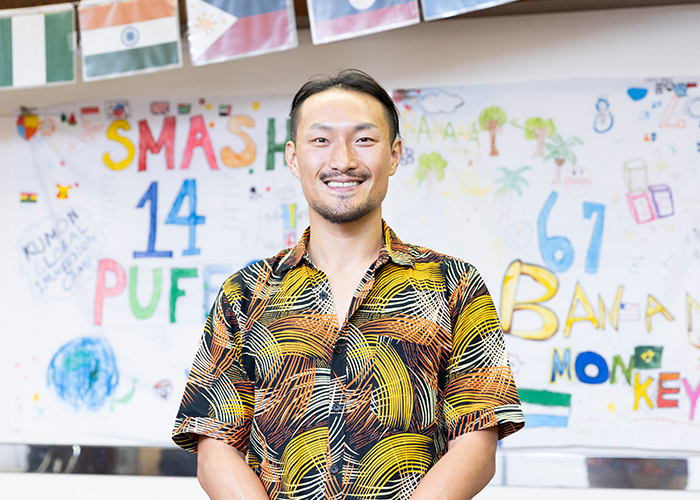


I used to dislike English.
Then it became my gateway to the world
—Today, you are fluent in several languages, including English, and produce documentary films around the world. But we understand that as a child, you used to run away from studying English.
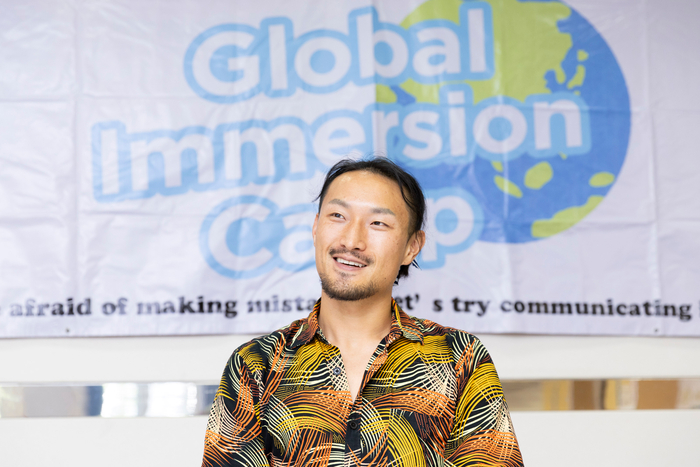
Yes… If I could travel back in time and meet my younger self, I would tell him, “English is going to be important later in your life, so don’t run away—study!”
When I was 10 years old and attending elementary school in Korea, my mother enrolled me in KUMON to help improve my English. As I recall, I studied English and Korean with KUMON.
I loved playing outside, and at the time I kept wondering, “Why do I have to study English?” So I was always trying to get away from my KUMON studies.
As you might imagine, I ended up quitting KUMON after about six months. Looking back now, though, I am truly grateful to my mother for giving me that first encounter with English, even if she practically had to force it on a boy who only wanted to play. That is because learning languages can be a gateway to turning your eyes toward the wider world.
—How did you go from there to becoming interested in living abroad and working in film?
The first turning point was an exchange program during high school. I went from Korea to the United States and attended school there for two years. I really enjoyed my life in the U.S., and realizing that living abroad wasn’t as difficult as I had imagined gave me confidence. It made me want to visit many more places around the world, so I decided to attend Ritsumeikan Asia Pacific University (APU) in Beppu, Oita Prefecture, Japan. APU is a highly international university, with about half of its students coming from various countries and regions around the world.
Another major turning point in my life came when a friend I met at university lent me a digital SLR camera. I was immediately fascinated by photography, and became absorbed in taking all kinds of photographs and videos.
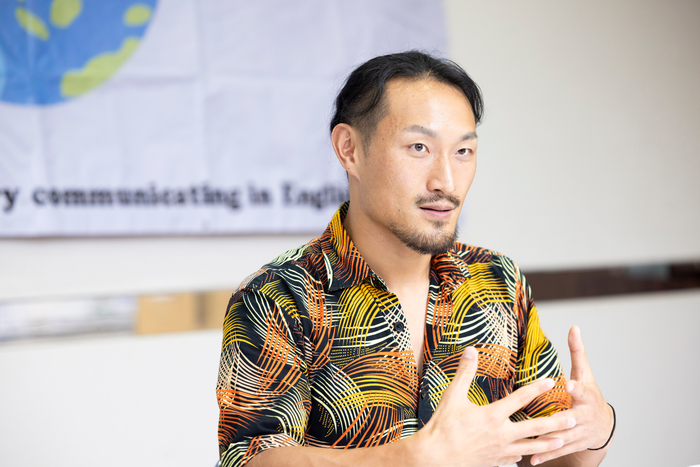
Then, in 2016, the Kumamoto Earthquake struck. Beppu, where I was living at the time, was also hit by strong tremors. As I witnessed the impact on the city around me, I wondered, “Could I use video to show more people what is happening here right now?” I filmed the city with my camera and shared the footage online. Many people watched it, and later, when I visited a restaurant in the city, the owner said to me, “I saw your video. Thank you for sharing what was happening.”
That experience made me realize that video is not simply a way to record beautiful or interesting things. It can also convey what is happening in a particular place and show people far away what life is like for those who live there.
“Video has the power to show people realities they might otherwise never see.”
That realization became a major reason why I decided to pursue a career in film.
After graduating from university, I began an internship at the Korea office of the World Food Programme (WFP), a United Nations agency. The video I had made about earthquake-affected Beppu, which I mentioned earlier, helped lead to that opportunity.
That marked the beginning of my international career. I later lived in Germany, Kenya, and Jordan, and today I am based in Nairobi, Kenya, where I produce videos and documentaries for NGOs and international development organizations.
“Our discussions were like a mini United Nations”:
The lifelong treasure I found at EIC
—Tell us about your experience as a camp leader at EIC (now GIC) during your university years.
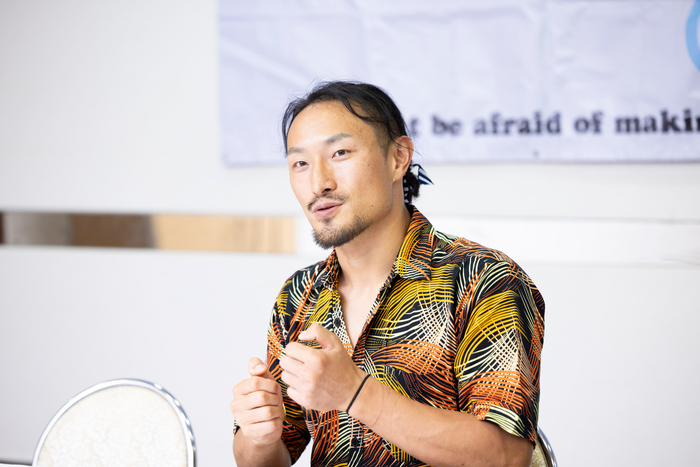
I participated in EIC as a camp leader in 2015, while I was still at university. Becoming an EIC camp leader was very popular among APU students. Friends who had participated spoke enthusiastically about their interactions with the children, the many wonderful experiences they had, and how much they had learned about themselves. Hearing their stories made me want to apply as well.
I remember that many students applied to become EIC camp leaders and that the selection process was highly competitive. So I was extremely happy when I found out that I had been selected.
Throughout the two-week camp, every night after the day’s program had finished, the leaders would hold a meeting to reflect on the day. The camp leaders came from many different countries and regions, and all of us had grown up with different cultures and social backgrounds. Naturally, there were times when our opinions differed.
But the process of discussing those differences and working together to find solutions was truly like a “mini United Nations.” Learning to look at things from multiple perspectives, find common ground amid diversity, and build consensus became an invaluable experience that has continued to support me throughout my career.
—Is there a particular experience with the children that has stayed with you?
There was one girl who kept calling me “Gorilla!” throughout the camp. The nickname itself didn’t bother me, but I found it frustrating that she showed very little interest in the English program.
Then, at some point, it suddenly struck me: “Oh, she’s just like I used to be.”
She reminded me of myself at 10 years old, when I kept running away from my KUMON studies and my teacher.
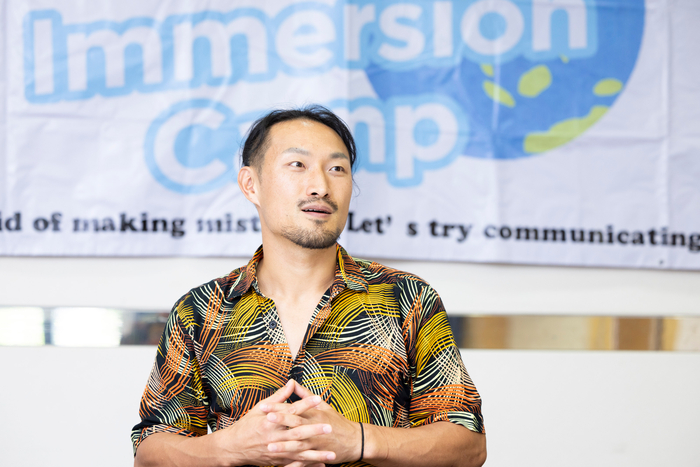
When it comes to learning a language, I believe the learner’s own motivation is essential above all else. So rather than rushing her, I patiently continued to watch over her, as if I were speaking to my younger self.
That required a great deal of patience and energy, though. After EIC ended, I called my parents back home in Korea. Both had worked as teachers for more than 30 years, and I found myself asking them, “I’m completely exhausted after just two weeks. How did the two of you manage to keep teaching for so many years?”
In any case, the experiences I had during those two weeks as an EIC camp leader, and the bonds I formed with my fellow leaders, remain lifelong treasures that have not faded even after more than a decade.
“I want to show children the real Africa”:
Why I returned as a guest speaker 11 years later
—This year, 11 years later, you returned to GIC, this time as a guest speaker.
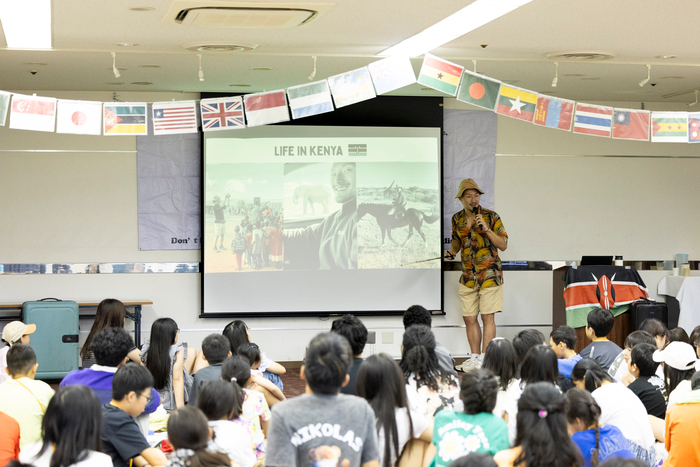
Even after my time as an EIC camp leader ended, I continued reading the EIC (now GIC) newsletter. I eventually contributed an article in response to a call for submissions in the newsletter, and that led to the invitation to speak at GIC this year.
Living in East Asian countries such as Japan or Korea, people can sometimes develop preconceived notions about Africa, associating it with things like “poverty” or being “underdeveloped.” But Nairobi, the capital of Kenya where I live now, is highly developed, and there are many fascinating cultures there as well.
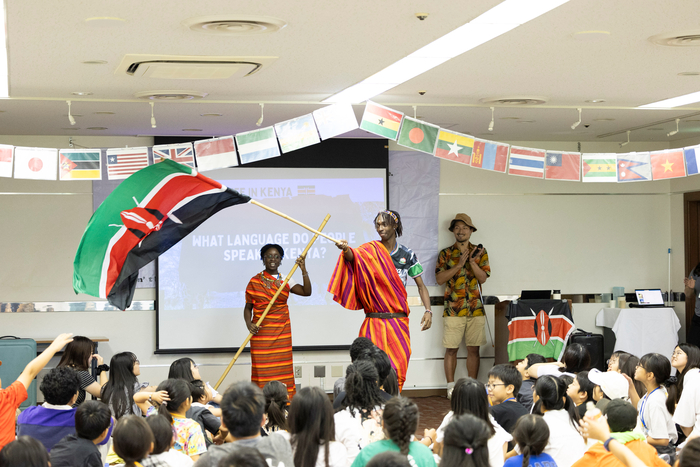
So this time, with the desire to “show the children the real appeal of Africa,” I gave an interactive lesson designed to make learning fun. Using fabrics I had brought from Kenya, we created something like a fashion show.
I was quite nervous right up until it began, but the children welcomed me with smiles. Seeing how much they seemed to enjoy taking part was a great relief.
During the group work that followed, whenever I noticed a child who was a little shy or did not seem particularly interested in the program, I made an effort to approach them and start a conversation. At the same time as encouraging the children, I also tried to give my full support to the current camp leaders who were working so hard for them.
Perhaps, in a way, I was also cheering on the person I used to be.
—Finally, do you have a message for our readers?
First, to children across Japan, including those who may be thinking about joining GIC in the future: English isn’t scary at all, and it isn’t difficult! Come to GIC, play as much as you can, have fun, and try challenging yourself with a new language. Just doing that can make the world you see much bigger—and much more interesting.
And to future camp leaders: GIC is undoubtedly a place where you can have unforgettable experiences and meet wonderful friends who will become an important part of your life. There may be times when you are unsure how to respond to the children, but continuing to experiment and find your way without giving up will give you an incredible opportunity to understand yourself more deeply.
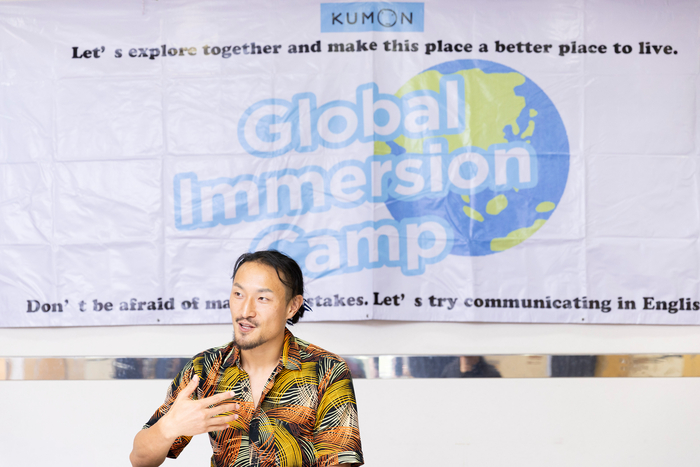
Every time you learn to speak another language, there are more places you can go, more people you can meet, and more stories you can tell.
I used to run away from studying English. Now, after learning English and Japanese, I am taking on the challenge of learning Swahili so that I can share the real voices of people in Africa.
Life is a continuous series of challenges. And once you give learning a try, you discover that it really is fascinating.
I will continue learning new languages, taking on new challenges, and sharing stories that can help more people.
Related Links KUMON English Immersion Activities (KEIA) Global Immersion Camp (GIC) Mr. Shin Dong Uk Instagram