



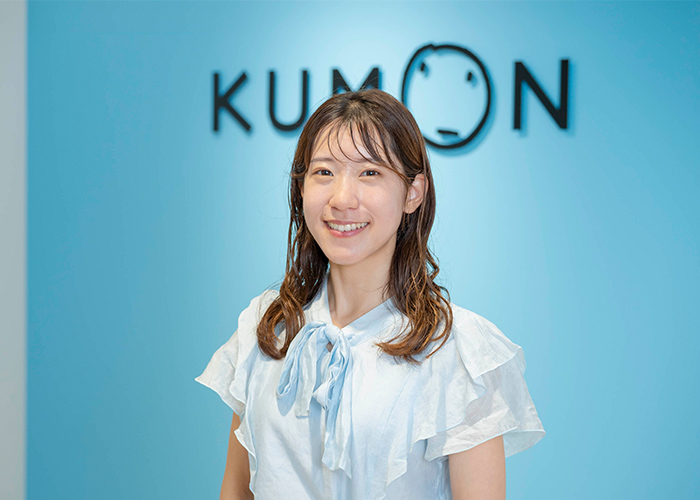


Kumon Study Helped Me Develop a Framework for Growth
―― You are currently working as a consultant. Could you tell us about your work?
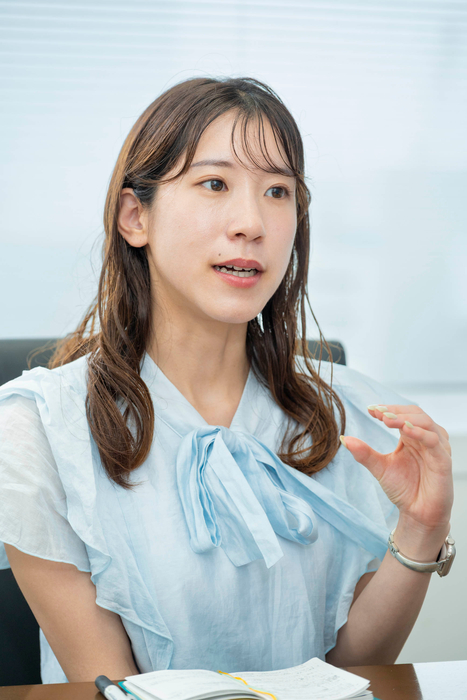
I provide support to Japanese companies in formulating business strategies and assisting with their implementation. Currently, I work in a team composed of members from multiple departments to support clients in the manufacturing industry. My job involves talking with executives and management teams and thinking together about the direction their business should take.
Our clients are required to make various decisions every day. I find my work rewarding when I feel that I have helped support an important decision. I also enjoy the process of gathering information about industries and fields that were previously unfamiliar to me, deepening my understanding in a short period of time, and creating proposals that provide value to clients.
Before joining my current firm, I worked for an automobile manufacturer for four years, where I was involved in developing service structures for electric vehicle battery-related businesses and supporting business improvement activities in Asian countries such as India and Thailand. Through those experiences, I became more interested in business planning and strategy development, which led me to move to my current consulting company.
―― We understand that you studied with KUMON from age three through the second year of high school. What do you think was the most significant skill you gained?
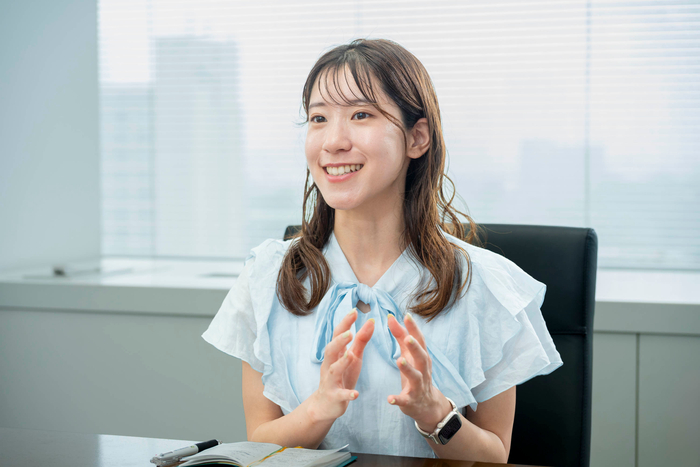
Through KUMON, I believe I developed a framework for growth. That framework consists of two key elements: knowing the right direction for my efforts, and having the ability to continue making those efforts.
Rather than simply working hard without a purpose, I learned to consider whether I was moving in the right direction toward my goals. When things did not go well, I would reconsider my approach and methods. Then, once I identified what I believed to be the right direction, I would continue working persistently toward it. Through daily Kumon study, I naturally acquired this habit.
When I was young, there were times when I solved the same worksheets repeatedly and even times when I worked through them in tears. Even so, I was ultimately able to achieve perfect scores through my own efforts. Those experiences gave me the confidence to know that if I continued without giving up, I would eventually succeed.
I first started KUMON because my brothers, who are eight and six years older than I am, were studying there. Since KUMON was already part of my environment, studying came naturally to me. I do not remember my parents telling me to study or do my homework. KUMON homework naturally became something I was expected to do myself. My parents also watched over me with the attitude that if I decided to do something, I should take responsibility for seeing it through myself.
The KUMON system itself suited me well because it allowed me to advance at my own pace and steadily increase what I could do. The habit of self-learning that I developed through KUMON has been valuable not only for university entrance examinations and professional certification exams, but also in my current job, where I am often required to learn about unfamiliar fields in a short period of time.
EIC Prompted Me to Reexamine My Own Values
―― What stands out to you from your participation in EIC, when you were in fourth grade?
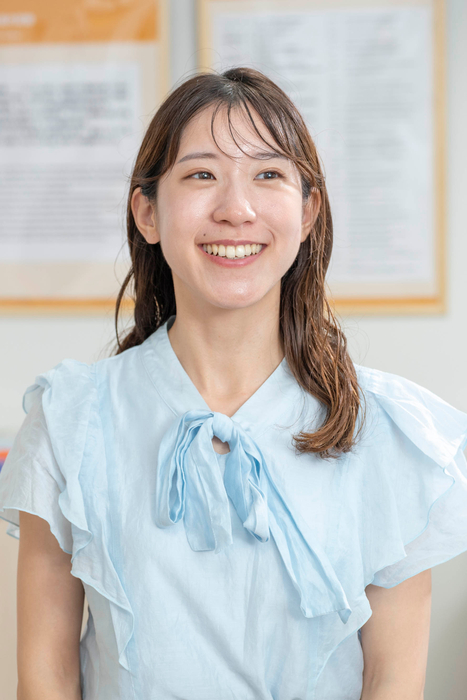
My motivation for participating came from admiring my older brothers, who had already attended EIC. I thought, “I’d like to go too.”
On the first day, I was so nervous that I could hardly speak at all. By the final day, however, I had become so close to the camp leaders and other participants that I cried because I was sad to say goodbye.
I was also struck by the foreign camp leaders, who expressed themselves cheerfully and openly through gestures such as high-fives and hugs. Until then, I had rarely encountered people from other countries, so I was surprised to discover that communication could take such forms.
At the same time, participating in EIC helped me recognize some unconscious biases that I held. At the time, I realized that I had unknowingly viewed people with different skin colors or backgrounds as people who should somehow be pitied or in need of our protection.
The international camp leaders were cheerful, confident, and taught us many things. Seeing them made me realize how one-sided my assumptions had been, which came as a great shock. For me, EIC was not simply a place where I learned the joy of using English. It was also my first experience of questioning my own values and the way I viewed the world.
―― How did that experience at EIC influence your life afterward?
The shock I experienced at EIC remained with me for a long time. At the time, I dreamt of working for an international institution, but I wondered whether someone with such biases was truly qualified to pursue international work. As a result, I gave up on that dream for a while.
The opportunity to confront those feelings again came during a study program in Uganda when I was a first-year university student. Deep down, I had always wanted what I called my “EIC redemption.” I was inspired by my professor’s words: “Only when you let go of your own sense of what is normal and experience another person’s normal can you truly understand their culture as an equal.” I wanted to visit Uganda, see people’s lives with my own eyes, and overcome the preconceptions that remained within me.
In Uganda, I met a university student my age who said things such as, “Even if we cannot change where we were born, we can change our future,” “I want to cherish every encounter,” and “We must continue learning until the very end of our lives.” Although he lived under more difficult circumstances than I did, he spoke with strength and optimism. I was deeply impressed, but I also felt a sense of regret.
I was fortunate to be born in Japan, where I have opportunities to learn, travel, and make many choices. Yet there are people in the world who have far fewer choices available to them. I gradually came to believe that those of us who live in more fortunate circumstances have a duty to understand that reality.
Afterward, I studied abroad in the Czech Republic and learned about former communist countries in Eastern Europe. In addition, I have visited 61 countries across Europe, Africa, India, the Middle East, and other regions. Looking back, I believe the impact of EIC was what first inspired me to want to understand the world.
The Worksheets in Front of You Will One Day Connect You to the World
――After visiting 61 countries, you have said that your desire to help energize Japan became even stronger.
While traveling abroad, I often meet people who say they love Japan. Many of them highly value Japanese culture, technology, and attitudes, and there have even been occasions when people treated me kindly simply because I am Japanese.
At the same time, I sometimes feel that we Japanese do not fully recognize the value of our country or appreciate what it means to have been born here. People overseas often view Japan so positively, yet we ourselves do not always embrace Japan with the same level of appreciation. I find that gap somewhat unfortunate and sad.
The more I learn about the world, the more I realize how many strengths Japan has. Of course, there are also issues that must be addressed. That is precisely why I hope to contribute in some way toward helping Japan strengthen its presence in the world and creating a society where people can genuinely feel glad to have been born in this country.
My travels have also been enriched by unexpected encounters. Sometimes a single comment from someone you happen to meet while traveling can change the way you live afterward. Once, on a tram in Budapest, Hungary, an elderly Japanese woman told me, “As long as you have courage, you can start over as many times as you wish, at any age.” At the time, I felt anxious that opportunities would become more limited as I grew older and had a tendency to rush through life. Her words gave me courage and helped me look forward to growing older rather than fearing it. Encounters such as these make traveling the world a powerful catalyst for self-reflection, giving me hope and energy to shape my future.
―― How would you like to challenge yourself in the future, and what kind of future would you like to create?
Through my work, I would like to support Japanese companies so that they can continue to grow and strengthen their presence in the global market. I believe that the accumulation of such efforts will also contribute to revitalizing Japan.
On a personal level, I would like to become someone who encourages people who want to take on challenges and those who have not yet fully realized their own strengths and potential. I hope to become a “motivator” who helps people take that first step.
In the future, when I have greater financial flexibility and more time, I would also like to become involved in international organizations and grassroots activities. As for travel, one of my goals is to visit 100 countries someday. I would particularly like to explore regions I have not yet visited, including South America and Cuba.
I value the idea of “making my choices the right ones.” In life, there are times when we do not know which option is correct, yet we must still choose. However, how we act afterward is up to us. Even if things do not go as planned, I believe we can change our perspective, continue our efforts, and ultimately make our chosen path feel like the right one.
―― Finally, do you have a message for children studying with KUMON, and for those considering participation in GIC?
To everyone studying with KUMON, I hope you will develop your own framework for growth through the worksheets in front of you.
To achieve your dreams and goals, simply working hard for a long time is not enough. It is important to continually consider whether you are moving in the right direction. If you feel you are not, change your approach. Then continue persistently in the direction you believe is correct. I believe the Kumon Method’s approach to self-learning provides a system that nurtures this ability.
For those who are unsure about participating in GIC, I encourage you to seize the opportunity in front of you. Having the chance to participate is itself a fortunate circumstance. You may feel nervous at first, but you do not need to do everything perfectly. Take the leap, and fully embrace the unique encounters and experiences that can only be gained there.
For me, each worksheet I completed eventually connected me to the world. The abilities that are developed through KUMON are not only for solving problems. They are the abilities to think independently, take on challenges, and turn the path you choose into the right one. Beyond the worksheet in front of you, a world that is uniquely yours is waiting to unfold.
Related Links KUMON English Immersion Activities (KEIA) Global Immersion Camp (GIC) Yumika Kamada’s Facebook