



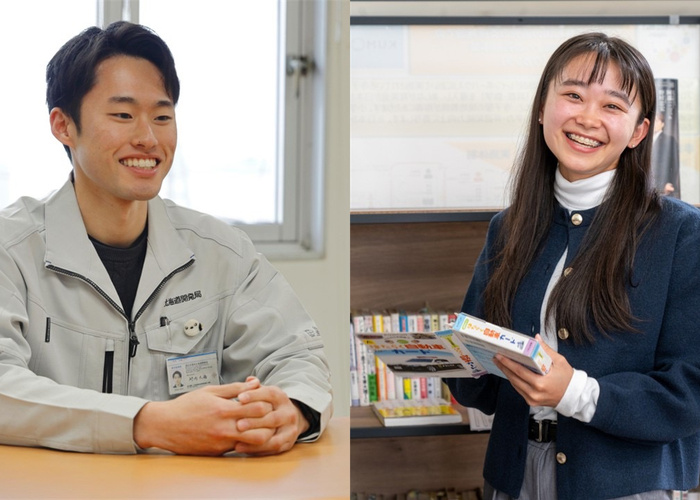


A major step forward today,
and the morning- GIC became our first step
―― — Now that you have begun your careers as working adults, what kinds of rewards and difficulties do you face in your day-to-day work?
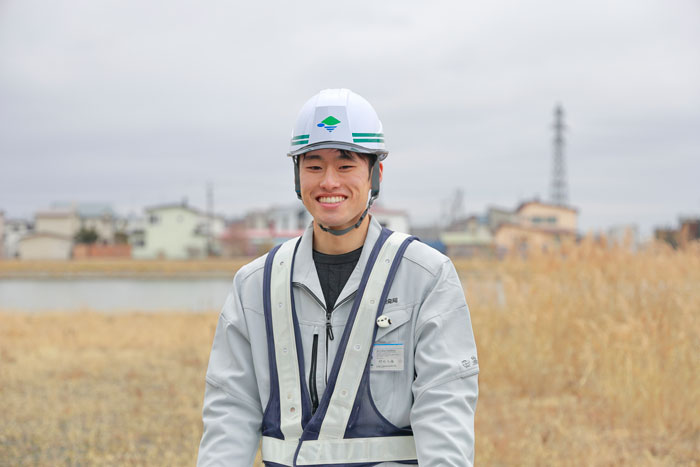
Daigo Takeuchi:
Only after becoming a working adult did I start to strongly recognize the feeling that my decisions affect society. I currently work at the Kushiro Road Office of MLIT, involved in road construction and management, and each project involves large sums of money. Of course, I’m not deciding everything on my own, but even so, my judgments connect to projects that use taxpayers’ money. The weight of that was something I could not have imagined when I was a student.
At first, I was more conscious of the magnitude of responsibility. What if I fail? What if I make the wrong decision…? I felt like that kind of tension was constantly clinging to my back. But at the same time, there is also a sense of fulfillment in thinking, “I’m being entrusted with such big work from my first year.” I still don’t know the ropes yet and rely on my seniors every day, but as the work I’m assigned gradually takes shape, I start to feel that my work is supporting a part of society.
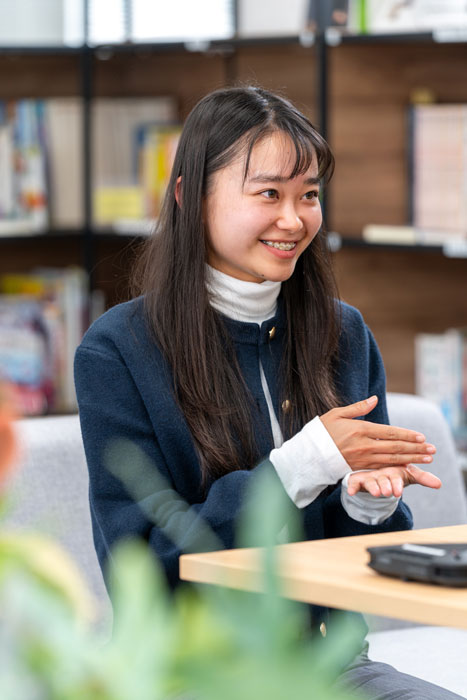
Mai Hatasa:
I am a homeroom teacher for a class of three-year-olds at a certified childcare and education center. Facing 18 children every day gives me a strong sense that “time in early childhood becomes the foundation of that child’s life.”
To be honest, at first, I was very anxious. I wondered, “Can I really support the current phase of these children’s lives?” and “How will my involvement connect to their future?” When I think about things like that, there are moments when I feel like I might be crushed by the pressure.
But children have a stronger ability to grow on their own than we imagine. When I see them up close as they try something new, or watch a child who was crying gradually smile more and more, being able to witness those moments right beside them truly makes me happy.
―― — Do you remember the day you first participated in GIC?
Takeuchi:
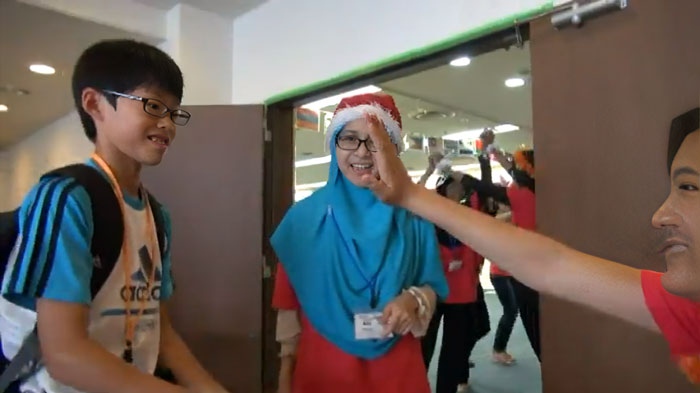
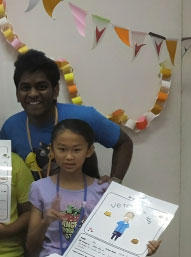
Even now, I vividly remember the scene at the hotel entrance on the first day. The moment the doors of the hotel lobby opened, the camp leaders that came from many different countries around the world welcomed us with full-power smiles and a loud “Welcome!!” …Their energy was so high that I instinctively took a step back.
At that moment, I felt, “I might have ended up somewhere different from what I imagined…” Back then, I wasn’t confident in my English ability, and I remember my anxiety growing more and more. I wondered, “Can I really get through a week in this atmosphere?”
But then, while we waited until all participants had arrived, a camp leader came up to talk with me one-on-one and patiently waited until I could say what I wanted to say. Even when I got stuck mid-sentence while speaking in unfamiliar English, they didn’t rush me or dismiss me, they simply maintained the posture of “listening.”
I’m sure that moment made me tension gradually melt away. And when I looked around, I saw that the other participants were not all fluent in English either, yet they were still trying hard to communicate something. Seeing that, I began to think, “I’ll try too.”
The overwhelming high energy at the hotel entrance and the sense of relief I felt right after that: that contrast formed an unforgettable start to GIC for me.
Hatasa:
I was also overwhelmed by that welcoming feeling on the first day. The energetic English, the extremely bright smiles, the atmosphere I had never seen before. I definitely had the same feeling as Takeuchi: “Did I come to the wrong place?!”
Also, since I wasn’t particularly good at English, thoughts like “Do I have to speak properly?” and “What if I fail…?” kept spinning around, and I felt as if my chest had tightened.
However, once I took a step into GIC, the camp leaders and friends who supported me in that anxious state stayed by my side the whole time. The camp leaders stayed close and told me, “You don’t have to change yourself forcefully,” and “It’s okay to be Mai as you are,” and little by little I came to feel, “It’s okay to be myself.”
The camp leaders and friends stay close to you and draw out strengths that you can’t bring out alone. That anxiety on the first day, and the sense of reassurance that came afterward, remain for me even now as an important formative experience.
The roots of our challenges that connect to our work today
―― — When thinking about your current career and path, what impact did your KEIA experiences have?
Takeuchi:
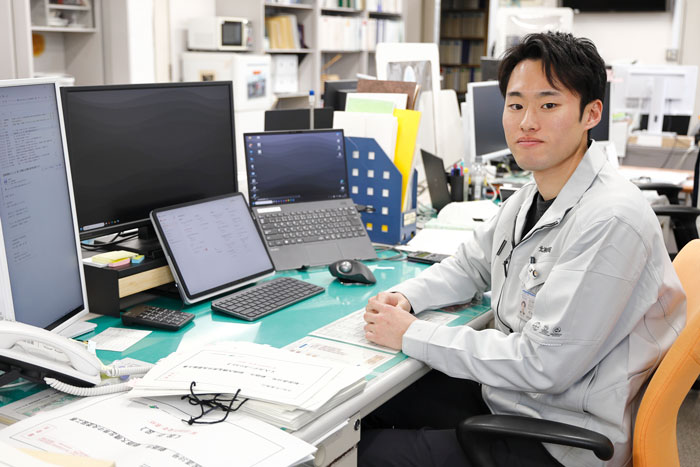
If I trace back the reasons I aspired to work at MLIT, most of them come from Kumon’s Overseas Study Tour (OST) and the Tohoku Trip, which I joined after GIC. OST is a study tour conducted for children who participated in GIC as well as camp leaders, with the purpose of experiencing local culture, seeing the realities of the world with our own eyes, and think about what we can do as individuals. I met many people in various fields who contribute to society and people in Indonesia and Thailand. In terms of chronology, I participated in OST before the Tohoku Trip, visiting local NPO organizations and receiving a lot of inspiration. By around the time OST ended, my desire to be useful to others became even stronger, and for a while my dream was to become an international civil servant (a UN staff member).
After going through those experiences, and with the experience of the Tohoku Trip added on top, I ultimately arrived at the path of MLIT. My experience in OST also had a major impact on my life and the formation of my career path. The Tohoku Trip is likewise a program conducted for GIC participants and camp leaders, and it is carried out as an opportunity to actually visit the earthquake affected area and deepen our learning and insights. At the time of the Tohoku Trip, even 4 or 5 years after the disaster, there were still broken buildings left in the area, and we also visited regions where daily life had not returned to normal. The shock of seeing those scenes through a child’s eyes is still vivid to me. “Can the power of natural disasters really take away people’s lives this much…?” That feeling burned strongly, deep in my chest.
From there, everything about me began to change. In order to major in civil engineering at university, I chose the science track in high school and narrowed my future options to a path that supports and protects people’s lives. The fact that I now work in road construction and maintenance is also an extension of that decision.
GIC also had a huge influence on the fact that, as a child, I could honestly think “I want to do something” and “I want to search for what I can do,” and take action in response to the reality I saw in the disaster-stricken areas of Tohoku.
What GIC taught me was: “If you challenge yourself even when you feel anxious, the future will change.” At GIC, using Japanese is basically prohibited. Every time I had to give a presentation in English, I was nervous, and there were so many times I couldn’t speak the way I wanted. But none of the camp leaders or peers laughed; they accepted mistakes as “something natural.” Because of that experience, from the bottom of my heart I came to realize that failure isn’t a big deal and to try challenging myself without being afraid.”
Another thing is the ability to think from the other person’s standpoint. Because at GIC you spend time with people from all kinds of backgrounds, you are required to communicate while sensing the speed at which the other person can understand, and the feeling of what the other person is trying to say.” Not cutting off the other person’s words, listening till the end, and trying to understand. It feels like I’m now practicing what camp leaders did for me when I was a child.
Since starting work, I keenly realize that public-sector work requires not only technical skills but also “the ability to face people. The foundation that built that skill for me was undoubtedly GIC. If I had not participated in GIC, I probably would not have aspired to work in disaster prevention, nor would I have chosen the path of becoming a civil servant.

Hatasa:
Originally, I did not have a clear dream becoming a childcare worker. I was interested in being involved with adults and children, and I went to university with a desire to learn broadly about education.
However, the reason I came to sincerely want to stay close to children’s lives” was the sense of reassurance I felt at GIC; knowing there was a place that provided emotional support.
At GIC I was full of tension and anxiety and lacked confidence, but the camp leaders stayed close to me the entire time. Even if I could not speak well in English, when it looked like I wanted to say something, they would wait beside me. When I challenged myself, they would acknowledge me no matter the result. Until then, I had hardly ever experienced a situation where I could express myself with that much peace of mind.
That sense of reassurance I felt then supports me even now, and it made me want to become someone who can create that kind of “emotional anchor” for children.
In childcare settings, facing the child in front of you with care is more important than anything. Even when a child can’t put what they want to say into words, feels confused, or starts crying, you don’t force words out of them—you stay close by their side. That moment becomes a re-assuring memory for the child. I can believe that because I myself was supported in that way at GIC. GIC taught me what it means to “truly face a person.”
GIC gave me another important lesson: the value of choosing for yourself. Whether to challenge yourself or to stop, or how to behave, at GIC there were many situations where you decided for yourself, and each time, the self who made choices gradually took shape.
That’s why I want the children at the childcare center where I work to also value the experience of choosing. No matter how small the choice, I believe that accumulating a sense of “I decided for myself” will influence that child’s future.
Building on the challenges we can take on now:
Toward the future that lies ahead
— Please tell us how you want to challenge yourselves from here on, and what you want to achieve.
Takeuchi:
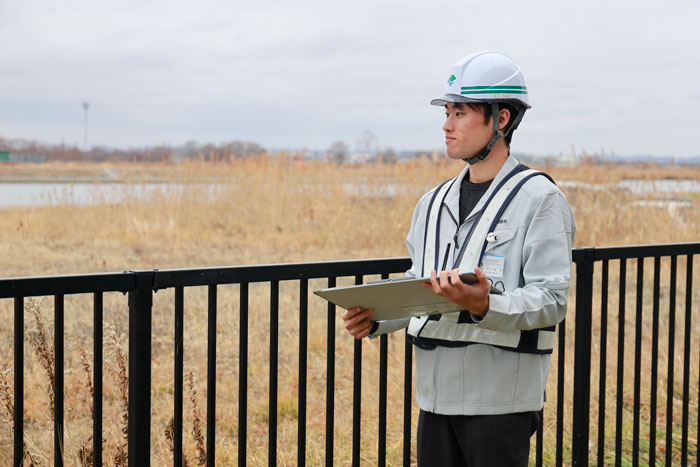
The feeling of wanting to be involved in disaster prevention is still central to me. I’m still in my first year of work, and what I’m responsible for is the design and maintenance management of road construction, but any task connects to the purpose of “protecting the safety and security of people’s lives.” I feel every day that this philosophy is extremely important to me.
However, the work of MLIT is broad, and the more I proceed, the more I realize that what I don’t know keeps expanding. So for now, while giving my all to the work in front of me, I want to broaden my range of knowledge and experience. Ultimately, I want to become someone who can contribute to Japan’s disaster prevention and mitigation.
Hatasa:
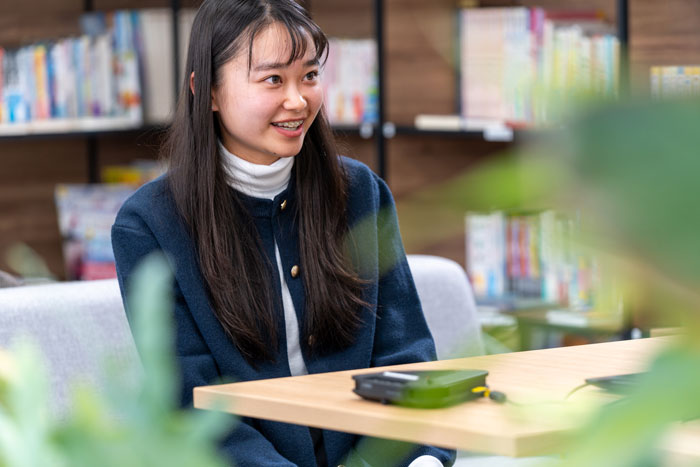
My main challenge from here on is creating an emotional anchor for children. By that, I mean not so much a concrete building or place, but the memories and experiences that remain in a child’s heart.
As children grow, there are many adults whose names and faces they will forget. But the sense of reassurance they felt then, and the experience of being accepted, can continue to remain deep in their hearts even after they grow up.
Of course, this is not a job where you can immediately see visible results. There will surely be many things that children only realize when they are old. But I think that’s okay, just as I myself came to understand the value of GIC more deeply after more than 10 years had passed. Children may also only come to think, once they become adults, “I’m glad I had that time.”
While stacking up the things that I can achieve now one by one, I want to keep challenging myself so that someday I can become a presence that supports children’s futures.
— Finally, please share a message you want to convey to juniors who are planning to participate in GIC from now on, and to children who are learning through Kumon.
Takeuchi:
If there’s a child who is hesitating about participating right now, I want to tell them this:
“90% of your anxieties won’t actually happen. Even if they do, it won’t be as big a deal as you think.”
Before participating, I was anxious about everything, such as whether I could speak English, speak in front of people, or fit in with others. But once the camp started, there were friends around me who had the same kinds of anxiety, and the camp leaders supported us with all their strength.
What I gained by challenging myself was bigger than I had imagined. Not just English ability, but also the attitude of “It’s okay to fail,” and “First, try taking a step forward,” became firmly rooted in me.
I think it’s because I had that attitude that I was able to study abroad, choose my career path, and challenge myself to join MLIT. So there is only one thing I want to say: “Even if you carry anxiety, I want you to try challenging yourself.” It’s okay to do it together with someone. It’s okay to stop along the way. But the fact that you challenged yourself will definitely become your strength. Your future self will surely feel proud of that experience.
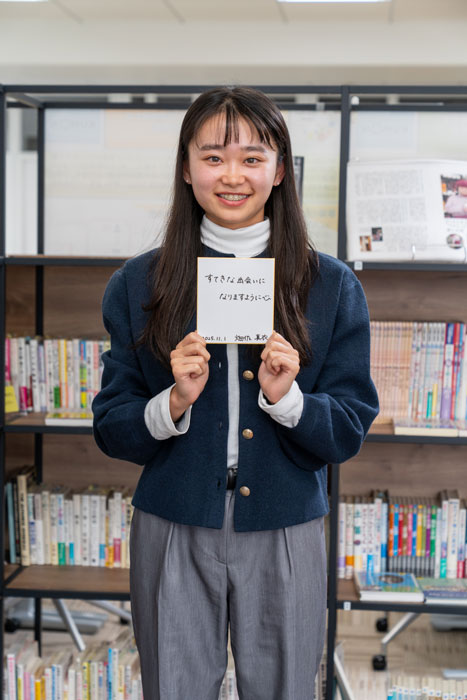
Hatasa:
What I want to tell you is, “There are things you can feel now, and challenges you can do now, that only exist at this moment.”
When I look back on my school days, challenging myself was hard at times, but even that struggle is now a treasure. My challenges at GIC did not have perfect results at the time, but the experience has become an irreplaceable support for me now.
You don’t know what will happen as a result of challenging yourself. You might succeed, or things might not go well. But the version of yourself who decided to try definitely exists, and that step will surely connect to some point in your future.
And one more thing: “It’s okay to value your own pace.” You don’t have to move at the same speed as someone else, and it’s okay if there are times when you stop. There will always be people who watch over you and accept you.
At your own pace, face your own feeling of wanting to try. That small challenge will surely become a meaningful support in your life from here on.
関連リンク KUMON English Immersion Activities (KEIA) https://kumon-eia.com/ Global Immersion Camp (GIC) https://kumon-eia.com/gic/ Global Immersion Camp (GIC) 2025 https://www.kumon.ne.jp/kumonnow/topics/vol567/